How $0.90 a Month Is Powering California’s Push to Close the Digital Divide
-
by
j.chau
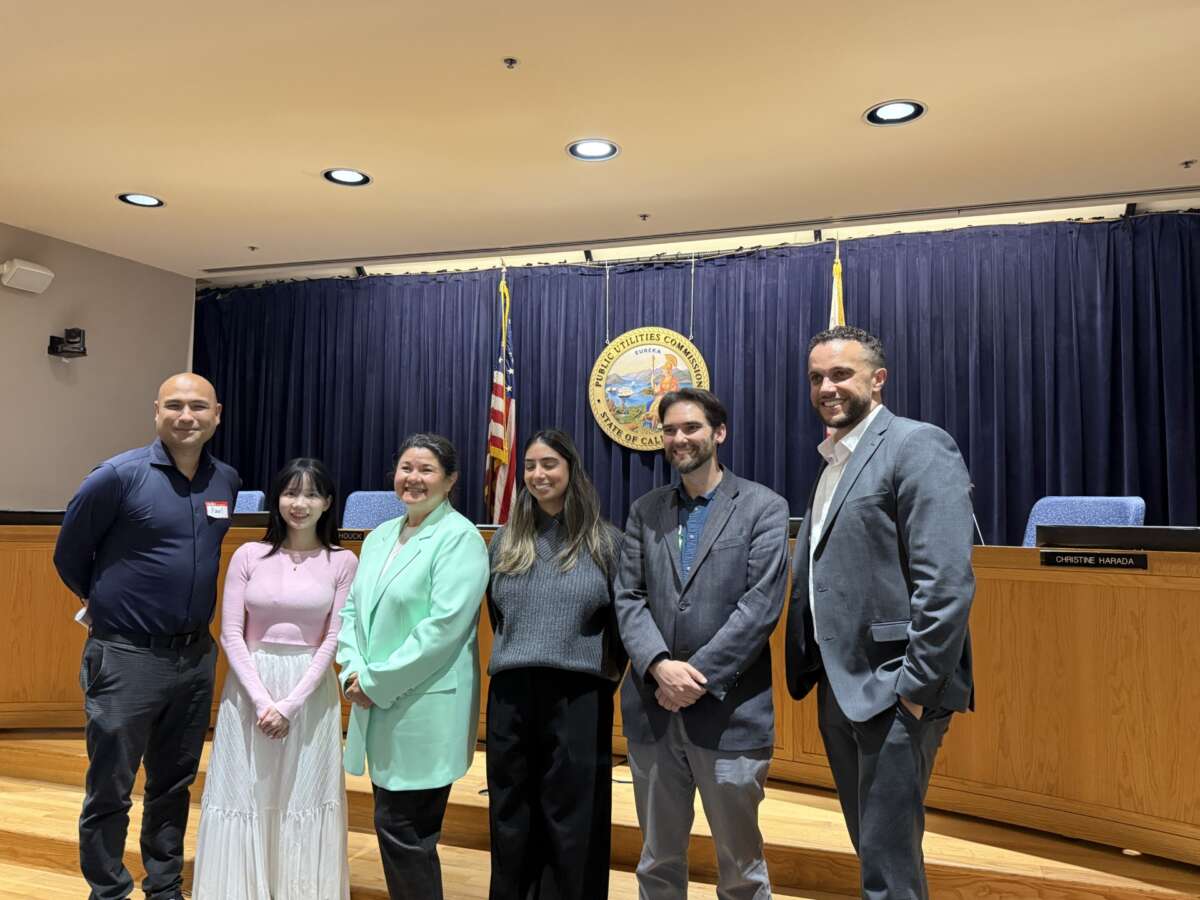
Photo (left to right): Paul Schindler, Hannah Hoang, Liliana Aide Monge, Navreet Hundal, Caleb Jones and Patrick Messac
Closing the digital divide takes more than infrastructure—it takes coordination, investment and community voice. That’s why UNITE-LA was proud to participate in the recent California Public Utilities Commission California Advanced Services Fund (CASF) Annual Workshop, where state leaders, industry experts and community organizations came together to align on one goal: expanding equitable access to broadband across California.
As part of the convening, UNITE-LA’s Director of Digital Equity, Liliana Aide Monge, shared insights on how updated policies—particularly those guiding regional broadband consortia—can better support deployment and ensure communities are not left behind.
But what does this all mean for Californians?
The $0.90 That Adds Up to Billions
Every month, Californians contribute about $0.90 on their phone or internet bill. It’s a small charge—but it fuels the California Advanced Services Fund, one of the state’s primary tools for expanding broadband access.
That funding doesn’t stand alone. It’s part of a much larger, coordinated investment strategy that includes:
– $1.86 billion in federal Broadband Equity, Access, and Deployment (BEAD) funding
– $2 billion through the Federal Funding Account (FFA)
– $136 million in CASF funding for 2025–2026
– Additional financing tools like the Loan Loss Reserve Fund
Together, these investments are transforming broadband from a convenience into essential infrastructure—on par with electricity or water.
From Policy to Progress: What’s Happening on the Ground
These investments are already delivering results.
Through the Federal Funding Account alone:
– $1.23 billion has been awarded
– 2.1 million Californians are benefiting
– 7,500 miles of fiber are being deployed
– 4,000 community anchor institutions—like schools and libraries—are being connected
Projects are reaching communities across the state, from Tribal lands to dense urban neighborhoods, ensuring that access to high-speed internet is no longer determined by zip code.
One example highlighted at the workshop is the Chumash Fiber Network—a tribally led effort bringing high-speed connectivity to residents through locally owned infrastructure.
Ensuring Low-Income Communities Aren’t Left Behind
Expanding infrastructure is only part of the equation. Affordability is just as critical.
Through CASF’s Broadband Public Housing Account:
– $30.1 million is available for 2025–2026
– Projects can receive up to 100% funding
– More than 28,000 low-income households have already been connected
These investments are designed to ensure that the communities most impacted by the digital divide can fully participate in the digital economy.
Access Alone Isn’t Enough
A key takeaway from the workshop: connectivity without adoption isn’t equity.
That’s why CASF also invests in digital literacy and access through its Broadband Adoption Account:
– 672 projects funded
– Up to 470,000 participants reached
– Support for device access, training, and community-based tech assistance
This work ensures that individuals not only have internet access—but also the skills and tools to use it.
What’s Changing—and Why It Matters
Recent updates from the California Public Utilities Commission aim to accelerate and strengthen this work, including:
– Expanding eligibility for broadband programs
– Increasing minimum service speeds to 100/20 Mbps
– Providing greater flexibility in funding and project design
– Strengthening the role of regional consortia
These changes signal a shift toward faster deployment and deeper community engagement—areas where organizations like UNITE-LA play a critical role.
Why This Matters for California’s Future
Broadband access is no longer optional—it’s foundational to education, workforce development, health care access and small business growth. In regions like Los Angeles County—where affordability and adoption remain significant barriers—these investments are directly tied to economic mobility and opportunity.
The Bottom Line
That $0.90 monthly surcharge is doing more than funding a program—it’s helping build a more connected, competitive, and equitable California. The challenge now is ensuring these investments translate into lasting, community-driven solutions—especially in the neighborhoods that need them most. And through its ongoing work, UNITE-LA will continue to play a role in making that vision a reality.
You can review full workshop slides here.
If you have questions about UNITE-LA’s digital equity work, please contact Liliana Aide Monge.
About UNITE-LA
For more than 25 years, UNITE-LA has been a champion for educational equity and economic mobility, working at the intersection of policy, systems change and programming. Headquartered in Los Angeles, UNITE-LA collaborates with key stakeholders—including educators, employers, policymakers and community leaders—to strengthen pathways that connect education to career success. By advancing policies and initiatives that expand access to high-quality early childhood education, improve college attainment, and enhance workforce readiness, UNITE-LA ensures all individuals, especially those facing systemic barriers, have opportunities to thrive. Learn more at www.unitela.com.
The Los Angeles Digital Equity Action League (LA DEAL) is convened by UNITE-LA.